48-Hour School Hackathon · iOS · Group Busy BEE · 2025

RECO

An AI-powered rehabilitation companion for athletes recovering from ACL surgery — helping them stay motivated through months of repetitive home exercise with psychological support, smart tracking, and medical-grade guidance.

Context: This project was conceived and built in 48 hours during an on-campus school hackathon. Our team, Group Busy BEE, received an Honorable Mention for the work.
My Role
API Integration & Frontend
Team
Group Busy BEE
Event
48-hour school hackathon
Recognition
Honorable Mention
Platform
iOS Mobile
02 — Problem

The biggest challenge isn't physical — it's psychological.

Teen and college-aged athletes struggle to stay motivated through repetitive, months-long home exercise programs after ACL surgery. Daily stress and negative mood directly correlate with lower exercise adherence.

“You feel depressed and powerless. Recovery feels endless. Every day you do small, repetitive exercises, but you don't know if you're getting better.”
41.8%Athletes experiencing anxiety & depression post-surgery
40%Reported depression rate during ACL recovery

Source: Caumeil et al. — Reinjury Anxiety and Return to Sport After ACL Reconstruction, 162 athletes

03 — Solution

Autonomy, Competence, Relatedness — the three pillars of motivation.

RECO is an AI chatbot grounded in Self-Determination Theory (SDT). It restores motivation by giving athletes a sense of control over their recovery, clear progress signals, and an emotionally supportive companion — VITA.

🤖
Character — VITA
AI-driven companion with medical knowledge, trained on PubMed research. Provides rehabilitation guidance with expertise in nutrition and recovery science.
📱
Smartphone IMU
Uses phone sensors to measure the angle of leg lift, speed, and amplitude — giving accurate, quantitative feedback on exercise form and progress.
🟩
Widgets
Home screen widgets showing recovery day count and daily check-ins, increasing utilization and giving athletes a stronger sense of companionship.
04 — HiFi Prototype

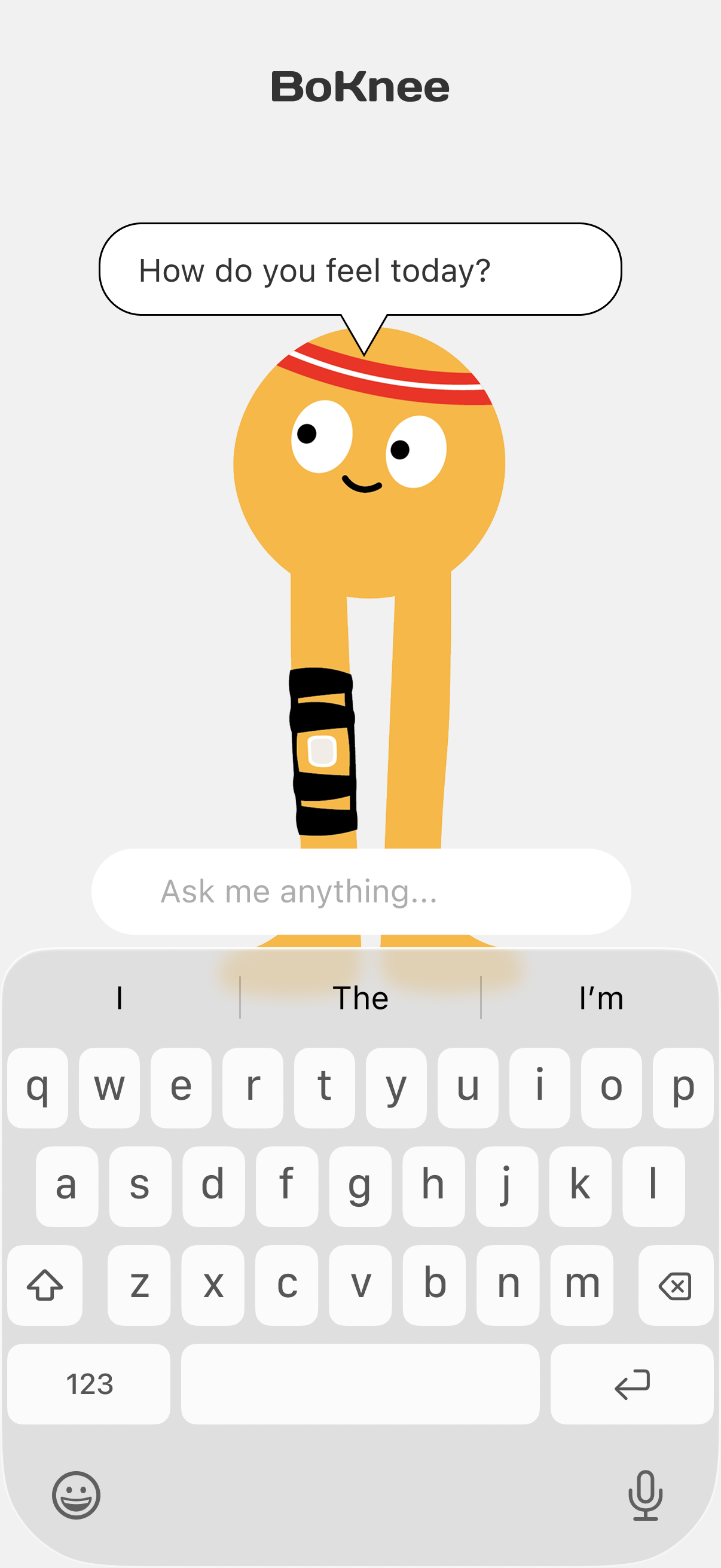
BoKnee — the companion in action.

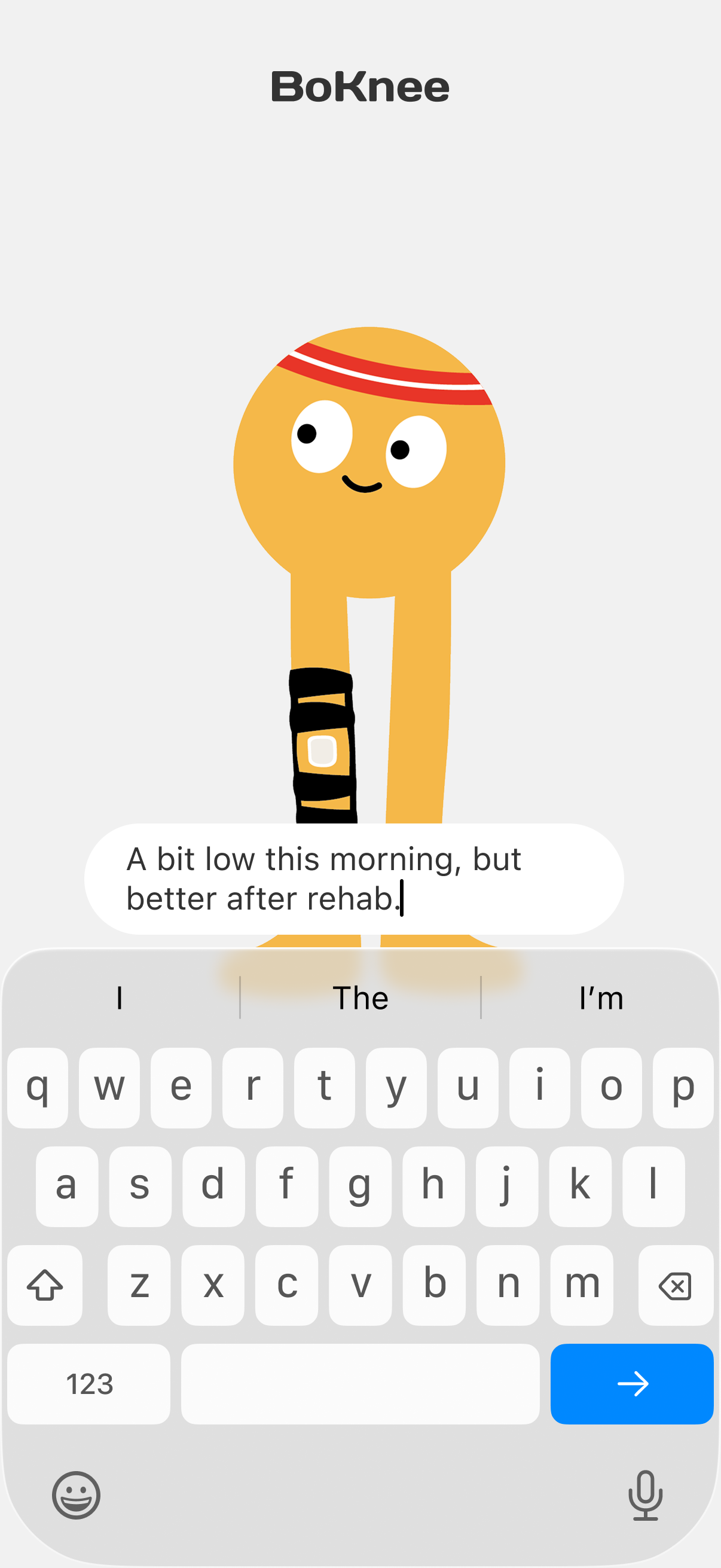
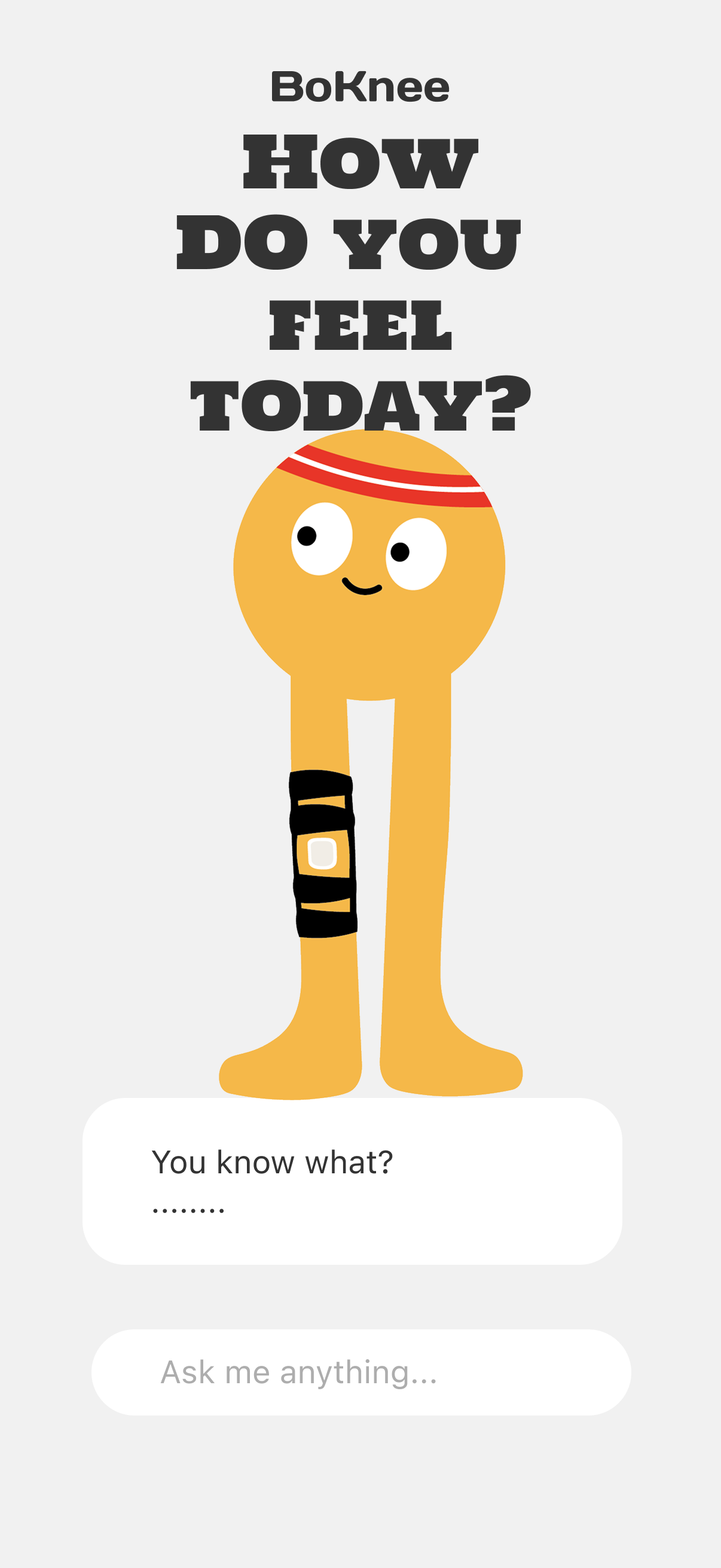
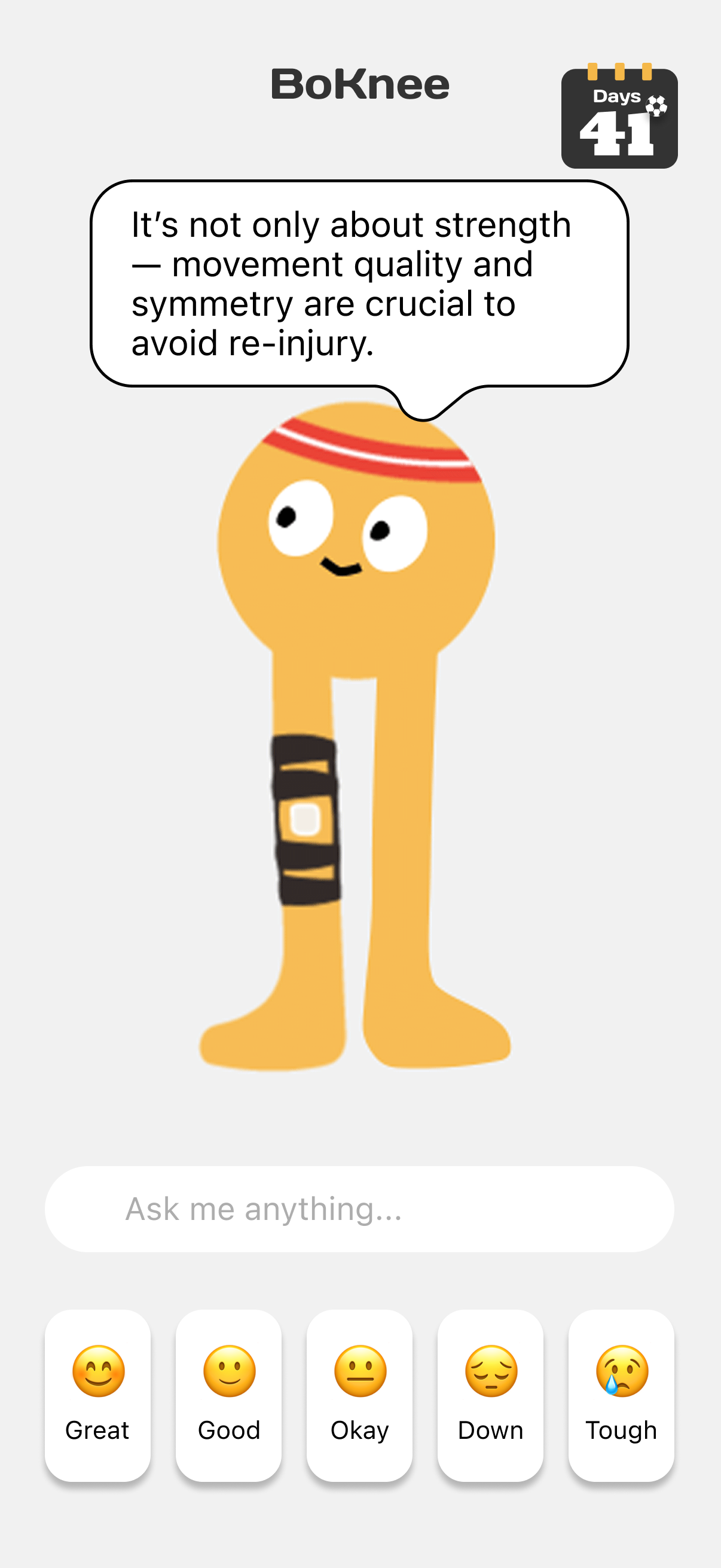
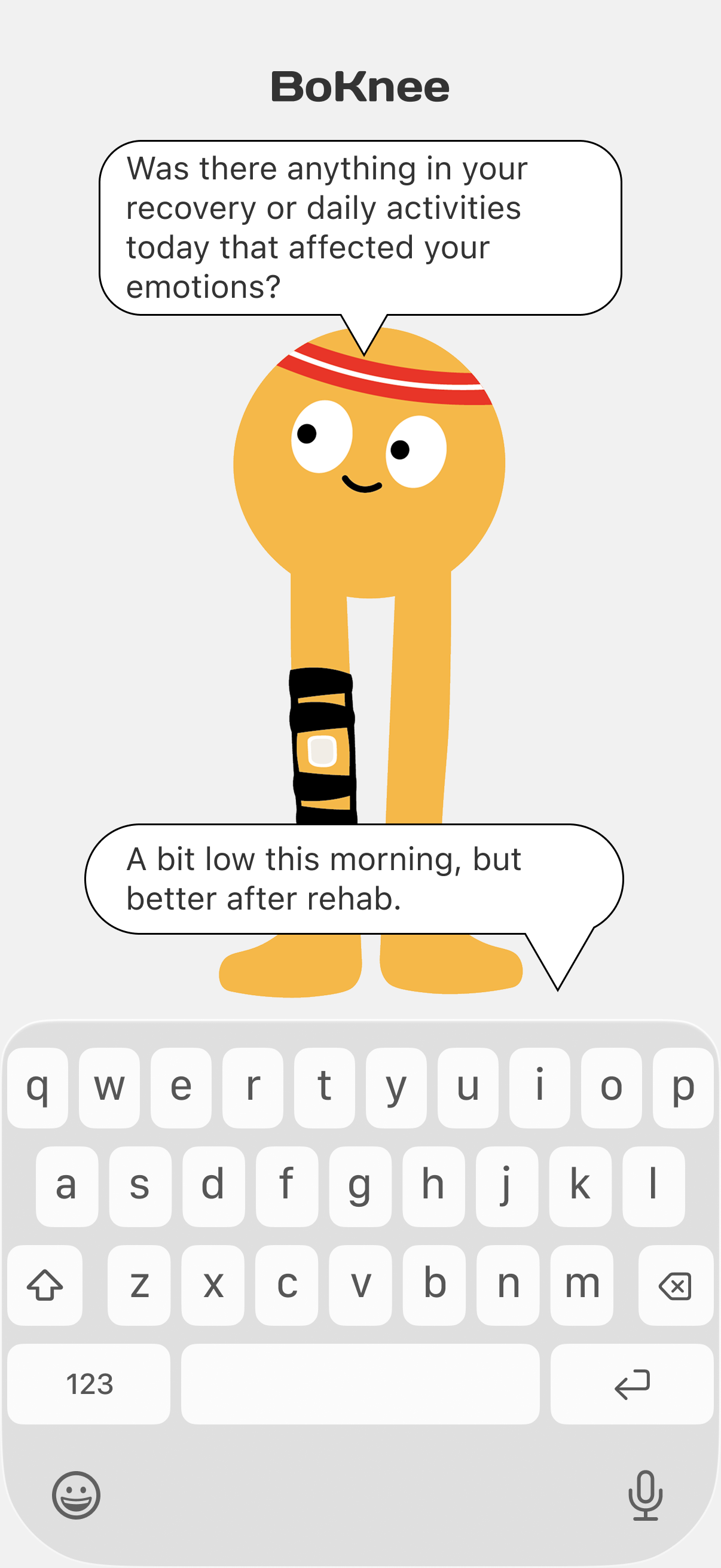
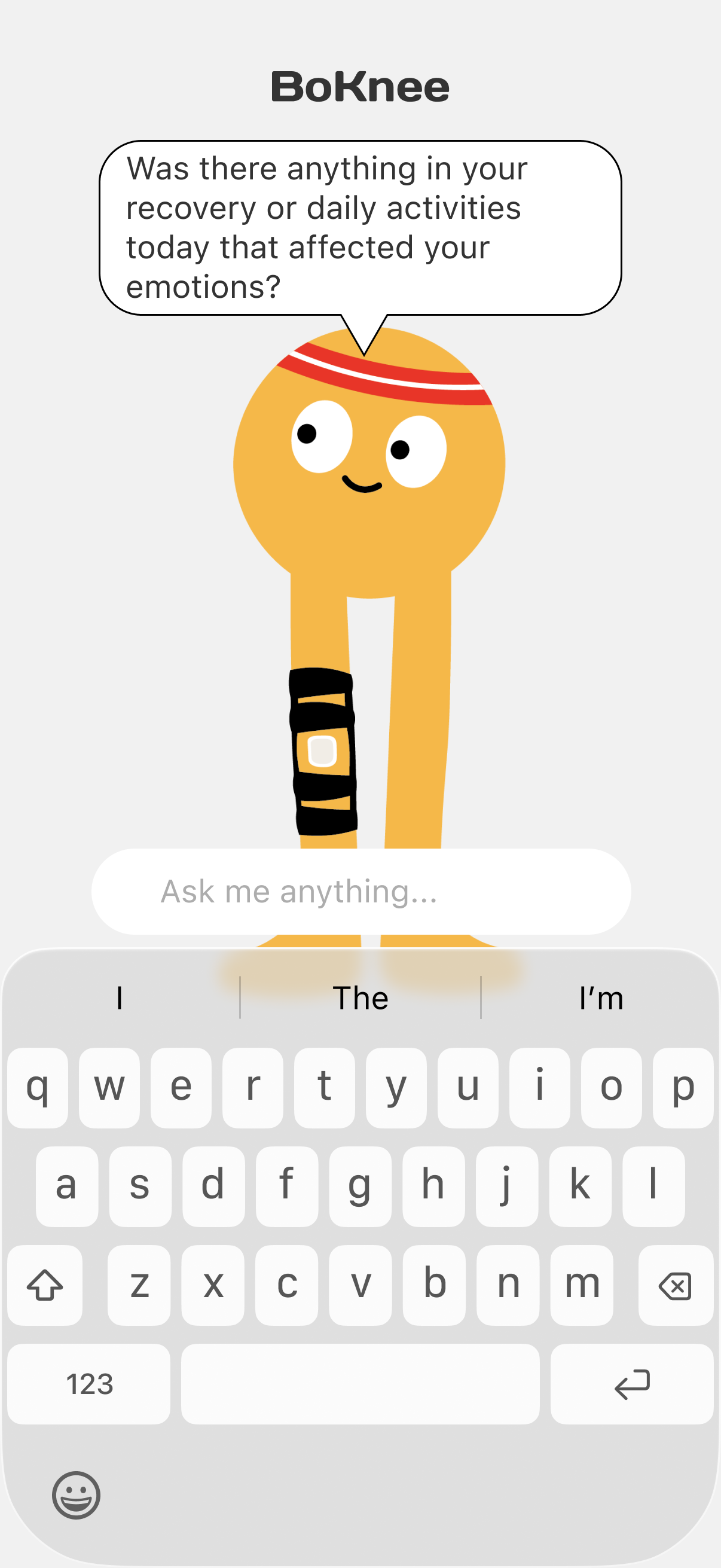
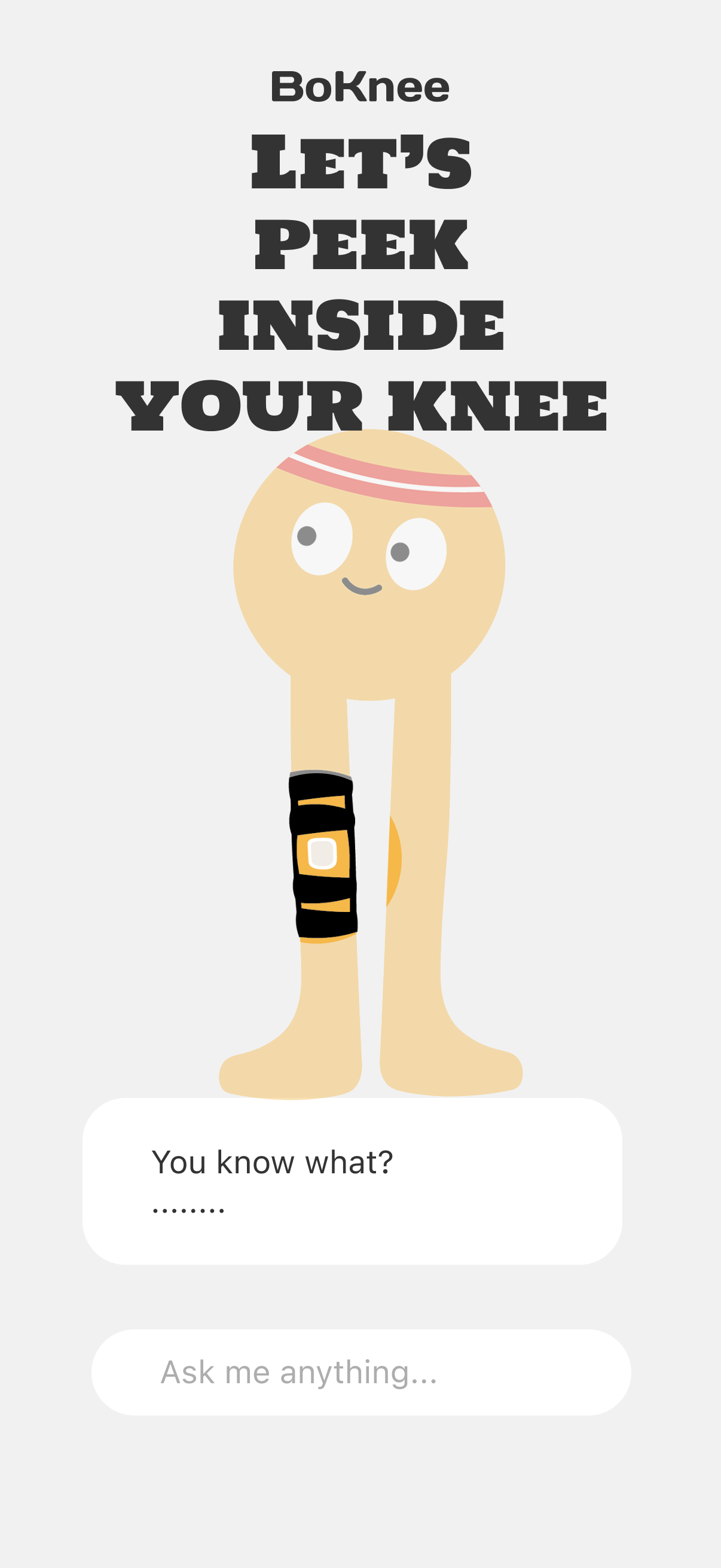
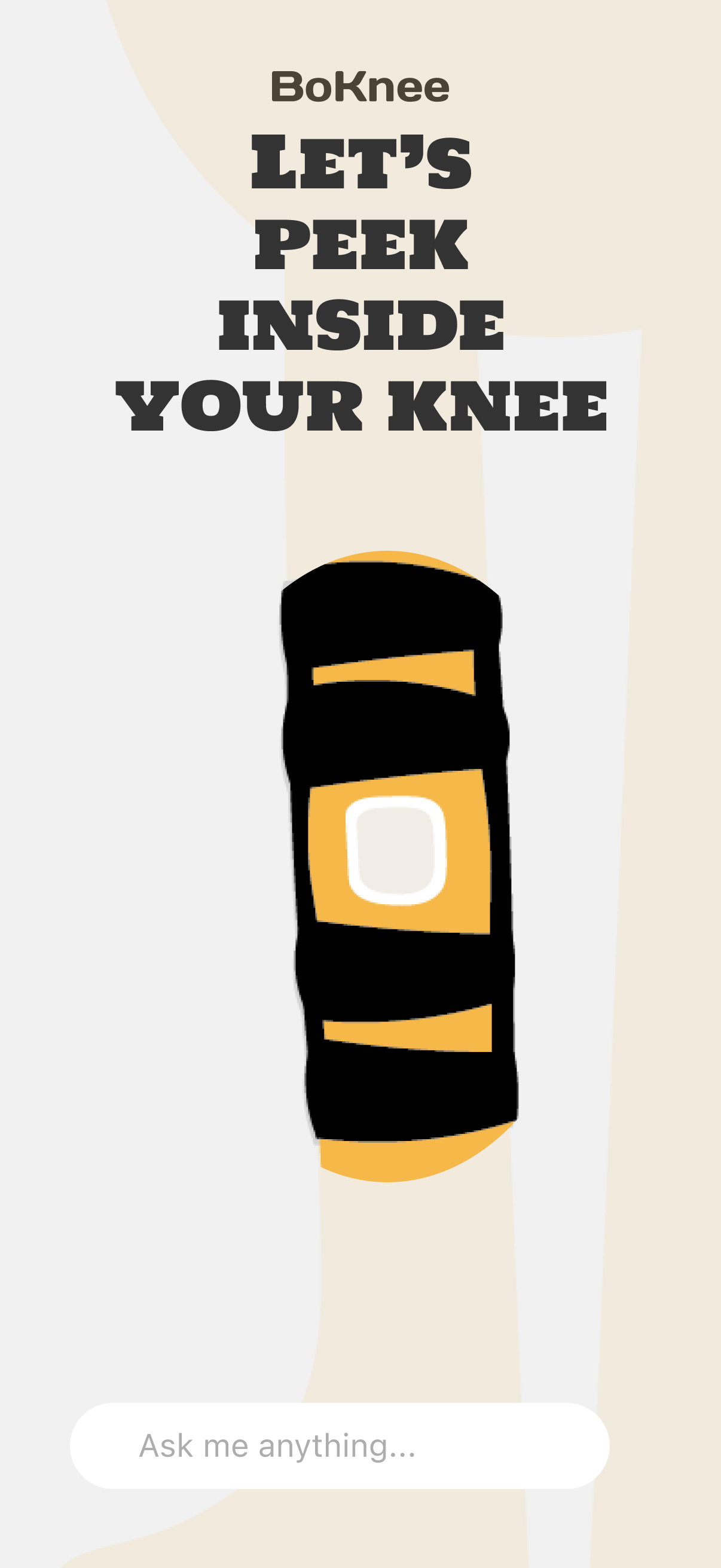
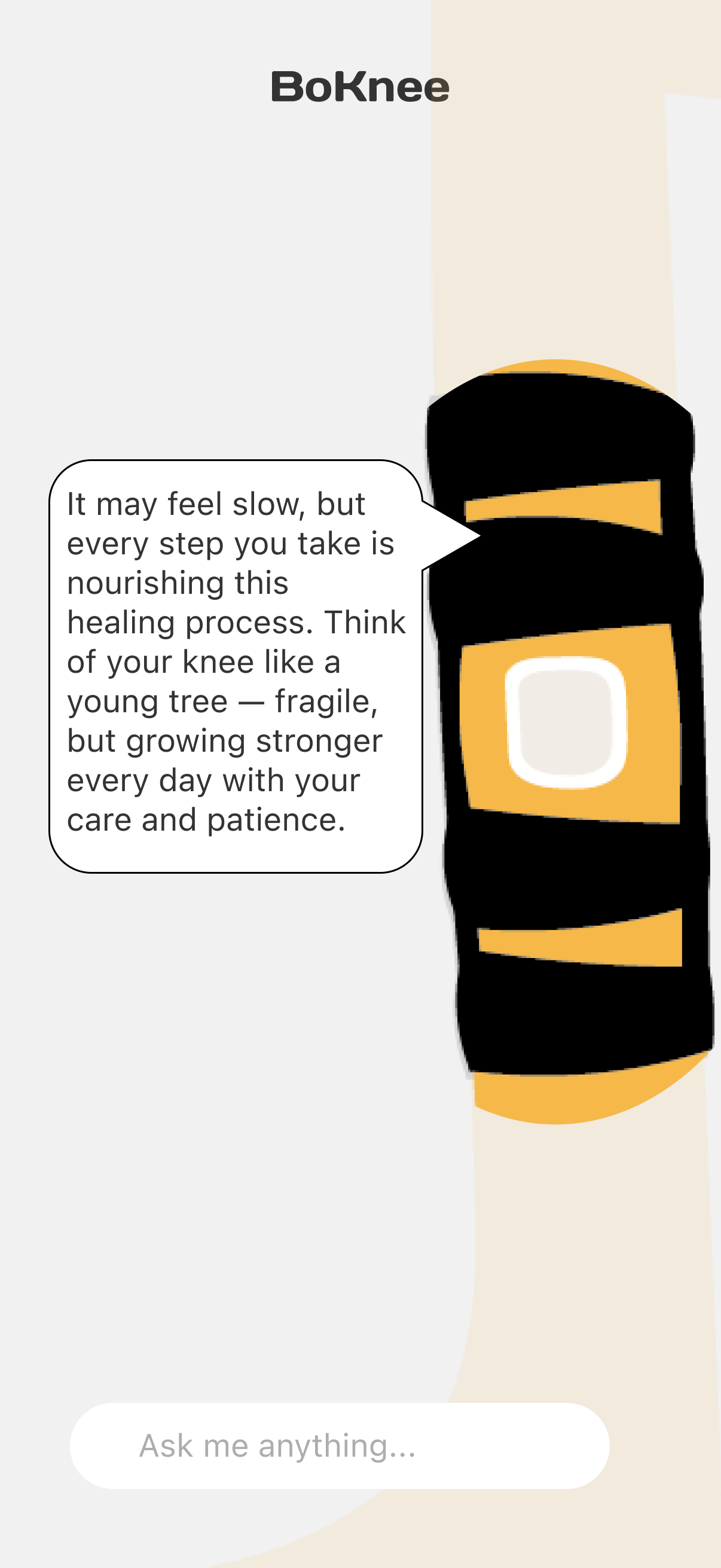
High-fidelity screens showing VITA's emotional check-in flow, mood tracking, and the app's visual language — warm, approachable, and designed to feel more companion than clinical tool.

BoKnee HiFi screen 1
BoKnee HiFi screen 2
BoKnee HiFi screen 3
BoKnee HiFi screen 4
BoKnee HiFi screen 5
BoKnee HiFi screen 6
BoKnee HiFi screen 7
BoKnee HiFi screen 8
BoKnee HiFi screen 9
05 — My Contribution
API Integration & Frontend Development

Building the technical layer that made the AI possible.

My focus was on the technical infrastructure — connecting external AI and medical APIs to the frontend, and building the interface components that brought the product to life.

  • 01
    ChatGPT-4o.mini API Integration
    Integrated OpenAI's GPT-4o.mini as the conversational engine powering VITA. Designed the system prompt to constrain responses to rehabilitation and nutrition domains, reducing hallucination risk in a medical context.
  • 02
    Entrez PubMed API — Medical Knowledge Pipeline
    Connected to the NCBI Entrez PubMed API to fetch peer-reviewed research on ACL recovery. This gave VITA access to real medical literature, making responses more credible and evidence-based.
  • 03
    Supabase API Key Encryption
    Implemented server-side API key management using Supabase to prevent key exposure on the client. Ensured OpenAI and PubMed credentials were never accessible in the frontend bundle.
  • 04
    Frontend Development
    Built the chat interface, feature screens, and widget components. Focused on creating a calm, approachable visual language that matched the emotional tone needed for a mental health-adjacent recovery product.
06 — Tech Stack

What we built with.

AI Model
ChatGPT-4o.miniOpenAI API
Medical Data
Entrez PubMed API — NCBI peer-reviewed research databaseMED-API
Security
Supabase Key Encryption — server-side API key storage and managementEncryption
Platform
iOS Mobile ApplicationSwift / React Native
SDT Framework
Self-Determination Theory — Autonomy · Competence · RelatednessPsychology
07 — Reflection

What I learned from building with AI APIs.

  • A 48-hour school hackathon meant ruthless prioritization — we focused on a credible AI + PubMed pipeline and a demo-ready UI. Earning Honorable Mention validated that the jury saw a clear concept and solid execution under extreme time pressure.
  • Securing API keys server-side is non-negotiable — even in a competition prototype, exposing credentials in a frontend bundle is a real risk.
  • Grounding an LLM with domain-specific data (PubMed) significantly improves response quality for specialized use cases.
  • System prompts are a design artifact — constraining the AI's behavior is as much a design decision as the interface itself.
  • For health-adjacent products, the tone of AI responses matters as much as their accuracy. Designing the model's personality is part of the work.
Next ProjectThis WebsiteDesigner & Developer