Agrox
Autonomous & Chemical-Free Pest Management
Understanding the
core challenges.
We conducted field interviews with 5 small-scale organic farms — 4 at Forsyth Park Farmers Market and 1 in South Carolina — to understand how farmers actually detect and respond to pest problems day-to-day. We focused on four questions: their current pain points, how they judge crop conditions, what tools they use, and whether they'd accept technological intervention.
Farmers Market
South Carolina
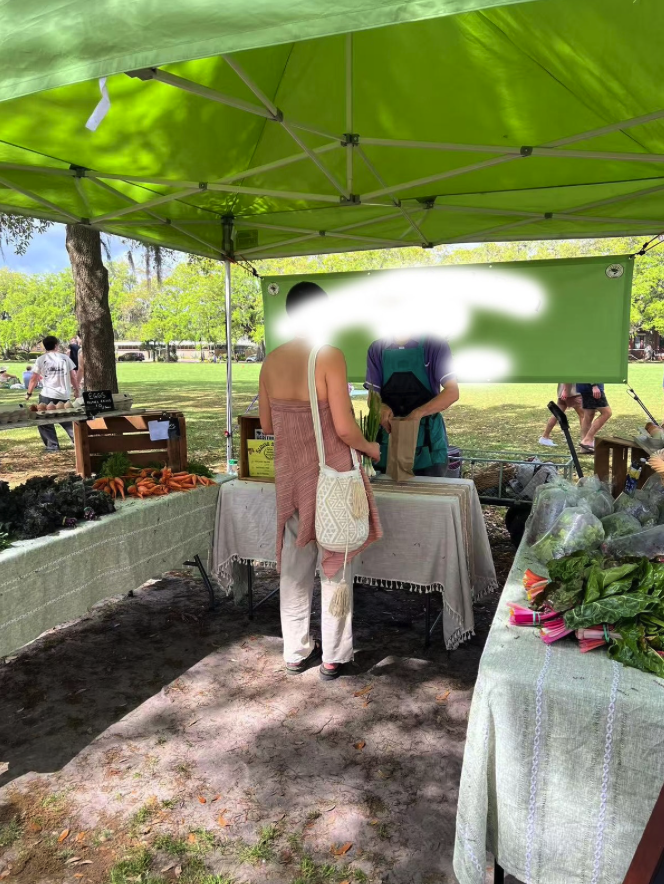
Forsyth Park Farmers Market

Visible pest damage on produce
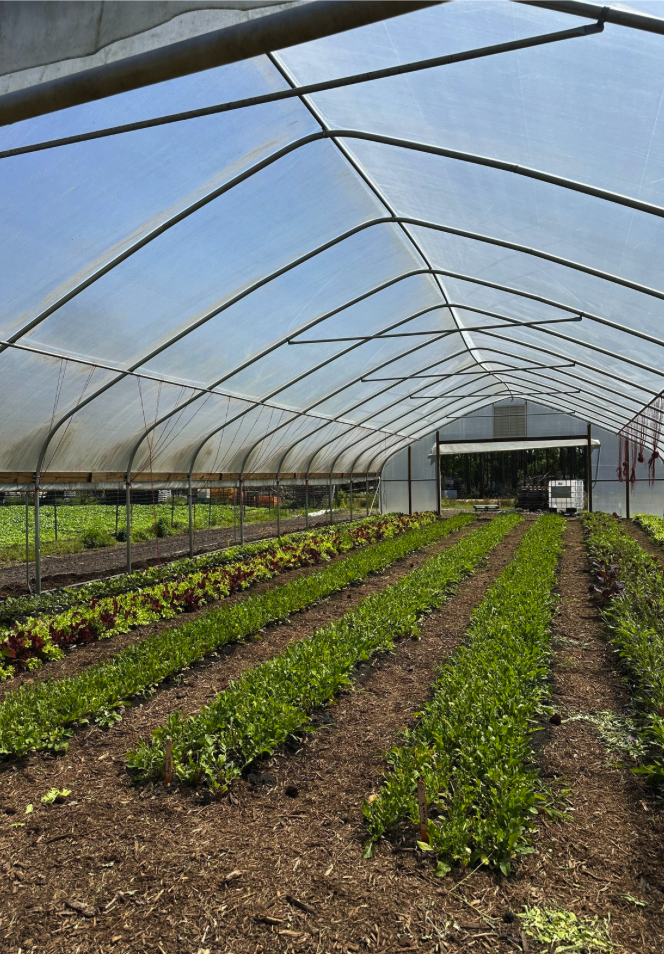
South Carolina farm visit
Environmental pollution
We assumed that small organic farms were most burdened by soil contamination, water runoff, and pesticide regulation — issues frequently covered in agricultural policy discussions.
Pest management
Every farmer we interviewed brought up pests within the first few minutes — unprompted. The real crisis wasn't regulation compliance; it was the daily, unpredictable battle to protect crops without chemical tools.
The pivot mattered. Had we designed around our original assumption, we would have built a compliance or reporting tool — solving a problem farmers didn't feel urgently. The field research forced us to reframe the entire design question.
What farmers told us
“Yeah. I mean, there's tons of risks, like pests. Sometimes we just… we're just picking bugs off by hand.”
→ Manual removal is the default — not a choice, but a last resort.
“We spray organic stuff — neem oil, BT — but when the pest pressure is high, it's hard not to use something stronger.”
→ Organic methods fail under pressure, putting certification at risk.
“Tend is super complicated. Too many features. It'd be nice if we could just choose the ones we need.”
→ Existing software is built for scale, not for small farms with limited bandwidth.
“Give me the date, what crop it was, what pest we saw, and maybe which garden it happened in. That's all I need.”
→ Farmers want minimal, structured data — not comprehensive dashboards.
The burden of
organic pest control.
Globally, pests destroy 20–40% of crops annually. For organic farms, the constraint is even sharper: they cannot use synthetic pesticides, so when pest pressure spikes, their only options are labor-intensive manual methods or accepting crop loss.
What surprised us was that the problem isn't just about killing pests — it's about knowing where they are before the damage is visible. By the time a farmer walks the field and spots an outbreak, entire rows are already unmarketable.
Insight 01
No systematic tracking. Pest identification relies on intuition. There's no consistent record of where outbreaks occur, making prevention nearly impossible.
Insight 02
Organic methods break down at scale. Neem oil and BT work at low pressure, but farmers feel forced to choose between their certification and their crop.
Insight 03
Technology adoption fails at complexity. Tools like Tend are abandoned because the learning curve outweighs the benefit for small operations.
Designing for the
everyday farmer.
How Might We
How might we help organic farmers monitor and control pests with minimal effort, while keeping the process eco-friendly and data-informed?
Core Needs
- A simple visual system to monitor outbreaks without walking every field.
- A non-chemical control method aligning with organic certification.
- An affordable, zero-training solution.
- A way to track effectiveness of pest control over time.
Frustrations
- Current solutions are too expensive or too complicated.
- Manual scouting is exhausting and unreliable, especially during rainy days.
- Lack of data to understand where pests are spreading or recurring.
Six ideas before
one answer.
We didn't start with a robot. We began by surveying academic literature and existing technologies to find what was scientifically viable and organically compliant. This produced six distinct concepts — each grounded in a different intervention logic.
We evaluated each concept against 4 criteria


How the app
is structured.
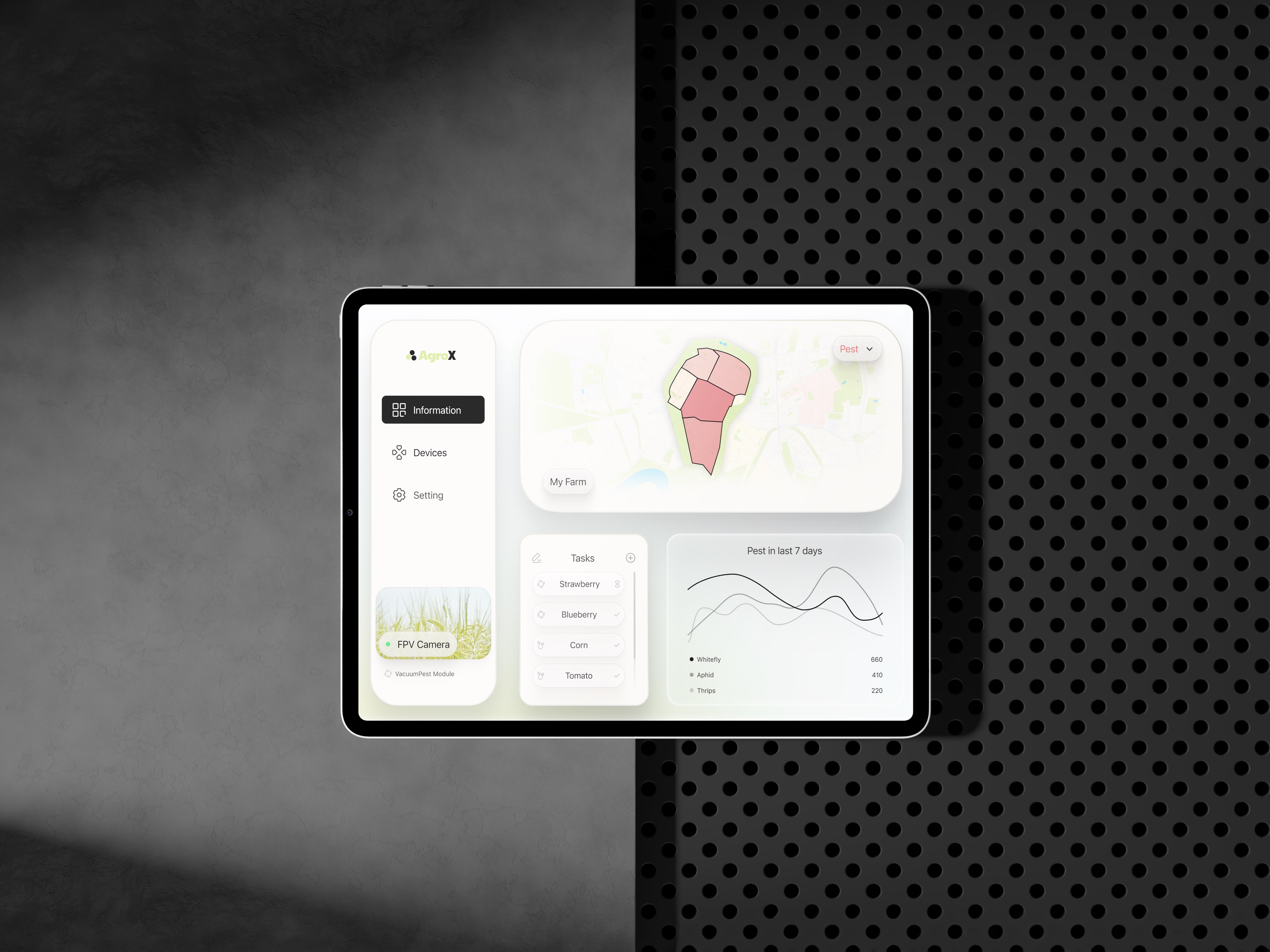
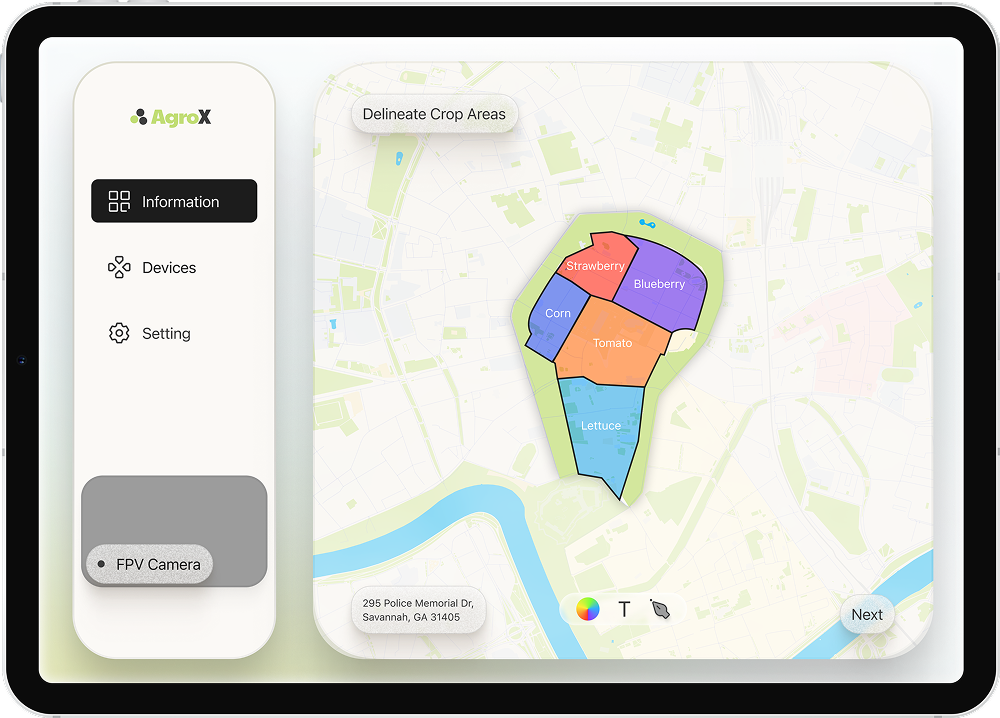
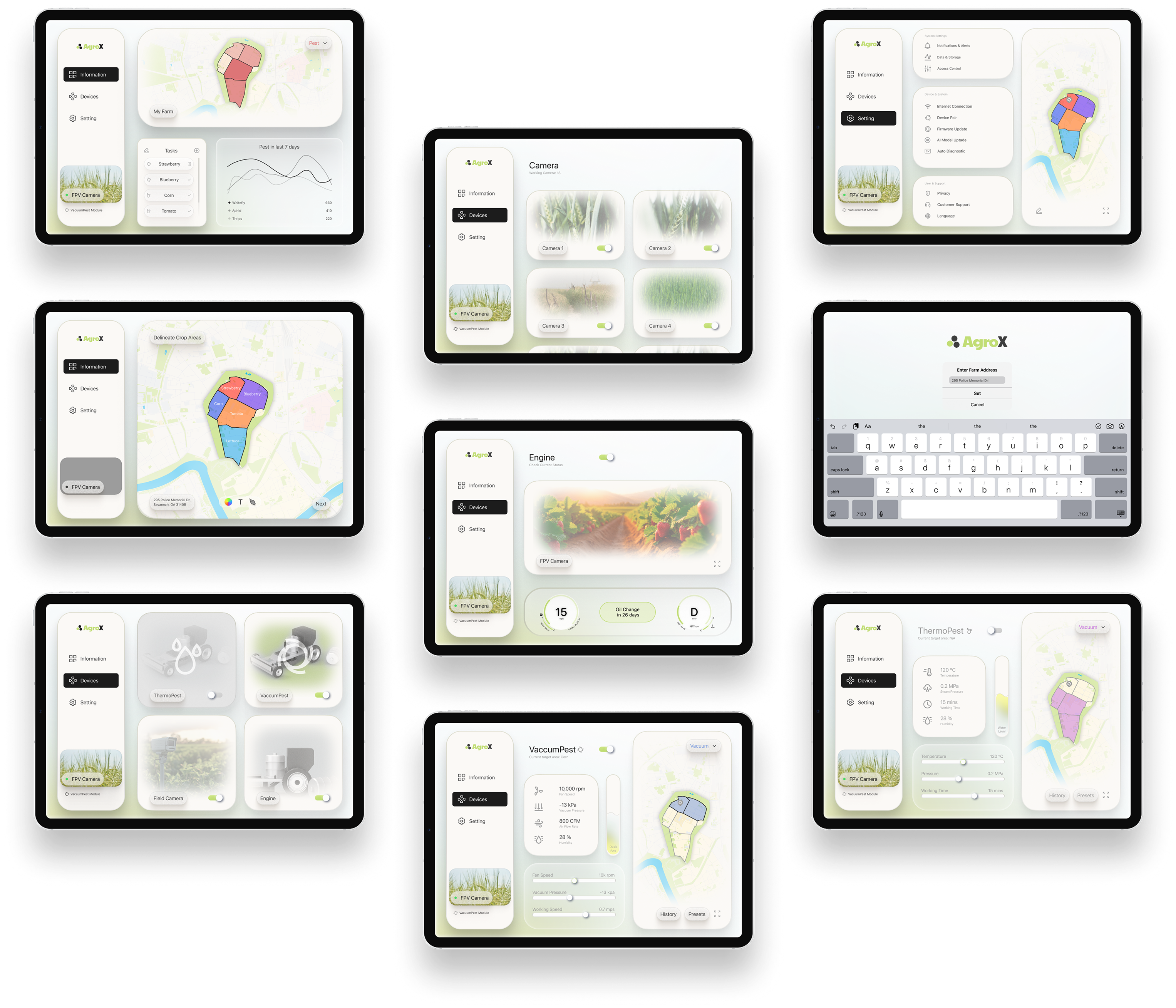
Before designing screens, we mapped the full app structure across three domains: real-time data, device control, and system configuration — minimizing navigation depth for time-sensitive field operations.

Hardware & Interface.
Translating the technical requirements into a robust physical robot and an intuitive digital dashboard for the farmers.
A.I. Visual Pest Recognition
The robot's onboard cameras scan crops in real-time. The AI model identifies pest types and severity, logging the data to the farmer's dashboard without requiring manual field walks.
Autonomous Pest Management
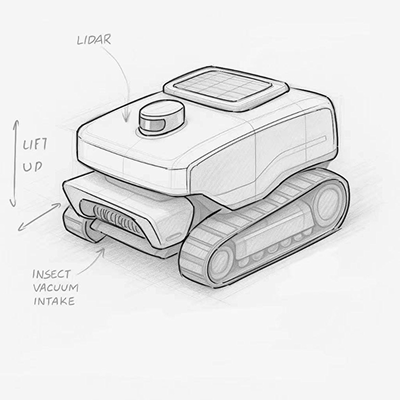
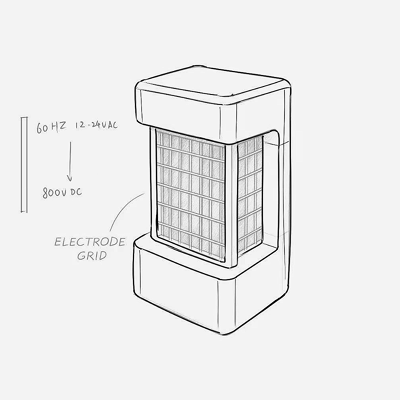
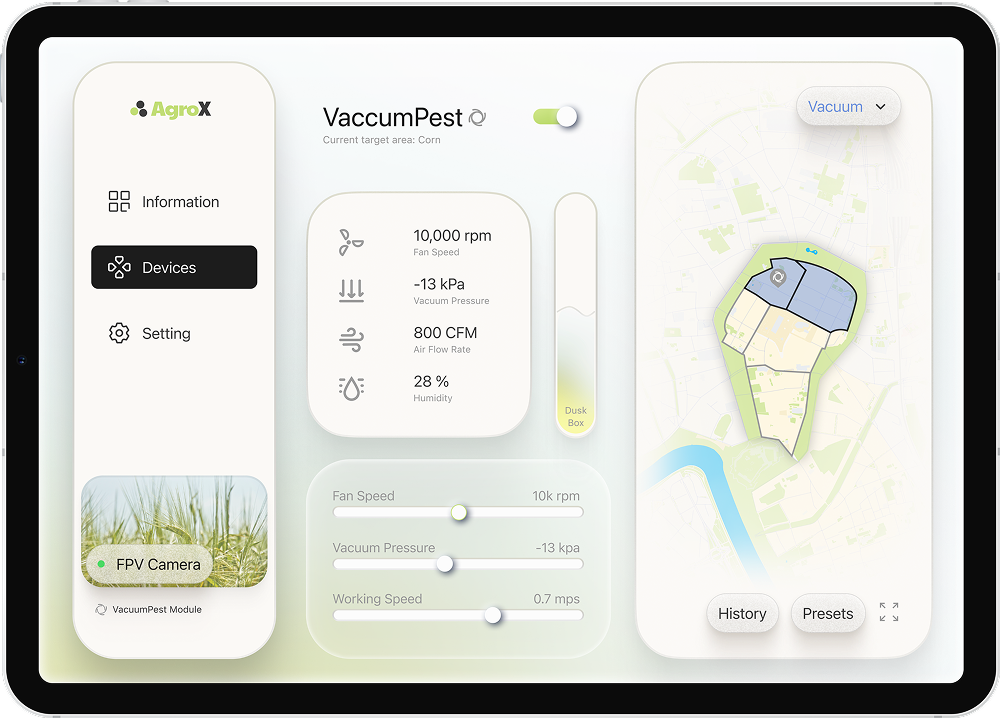
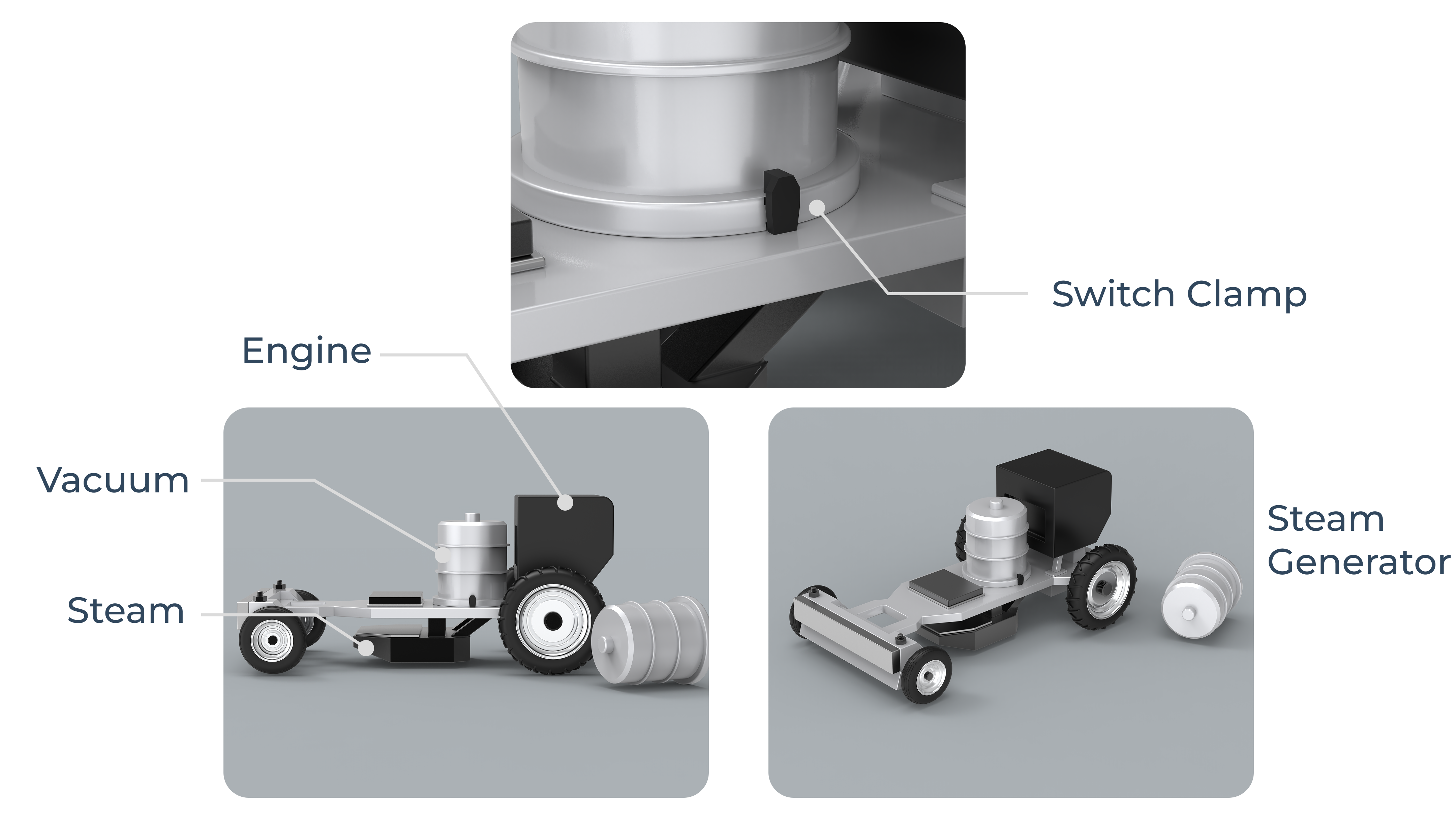
Once deployed, the robot navigates the farm autonomously. It uses a combination of bug vacuuming for adult insects and steam sterilization for soil-level eggs, ensuring a 100% chemical-free process.
Pest Heatmap Dashboard
Data collected by the robot is visualized on a simple mobile and web app. Farmers can instantly see which areas of the farm have high pest pressure and track the effectiveness of the robot's interventions over time.
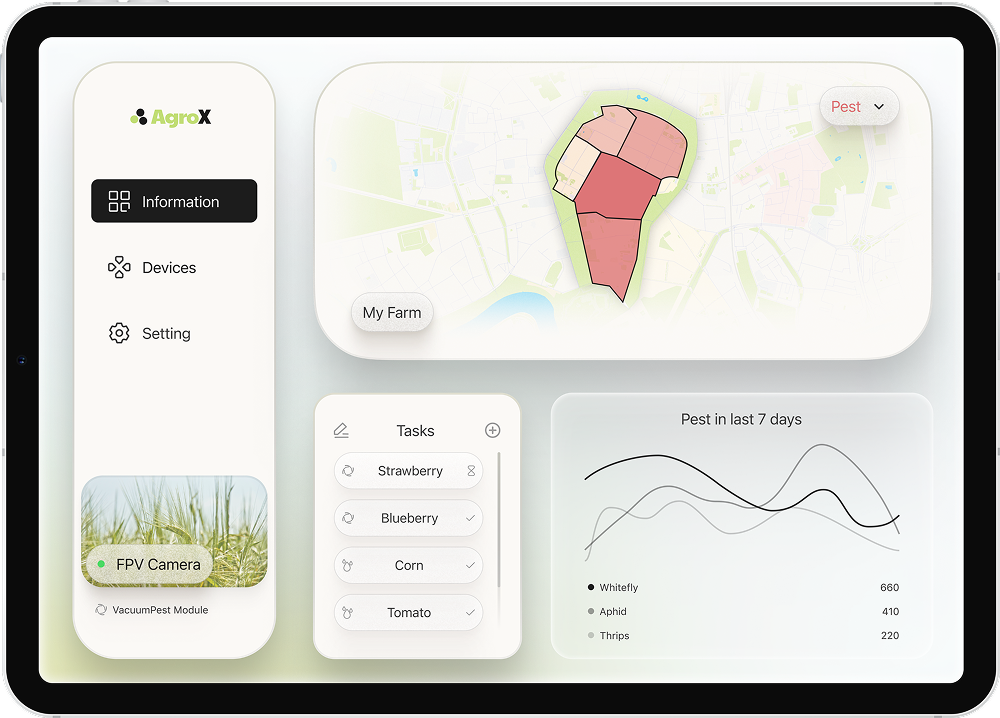
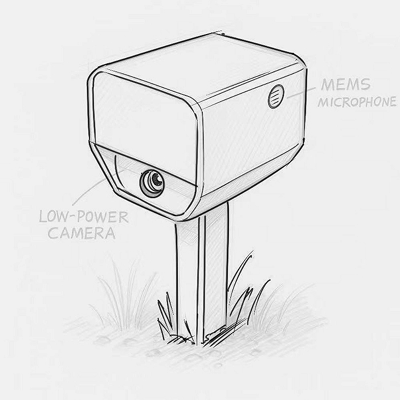
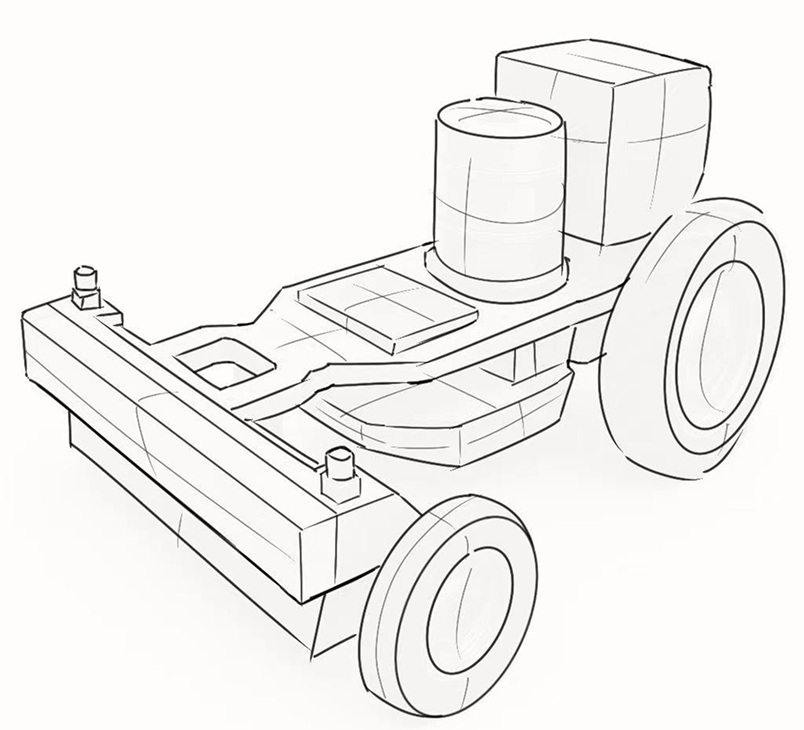
From sketch to reality.
01. Sketch

02. Hifi
03. Model
What we learned.
What remains open.
Hardware constrains UI design
The vacuum and steam modules can't operate simultaneously — this physical constraint directly shaped how we designed the device status UI. Modes needed to be explicit and mutually exclusive, not hidden in settings.
Tablet over phone — a research-driven call
We initially prototyped a mobile interface. Field context changed our minds: farmers in muddy gloves need larger targets, better readability in sunlight, and a device they can prop up hands-free. iPad became the primary platform.
Still unresolved
AI recognition accuracy drops in low light and dense foliage — conditions common in real farms. Sound spectrum analysis (from PestVision) could supplement visual detection, but we didn't have time to validate the model. This is the most significant open question for a next iteration.
User adoption is untested
We designed for low technical literacy, but never ran usability tests with actual farmers. The gap between "intuitive in research" and "usable in a field" is real — and we know it.